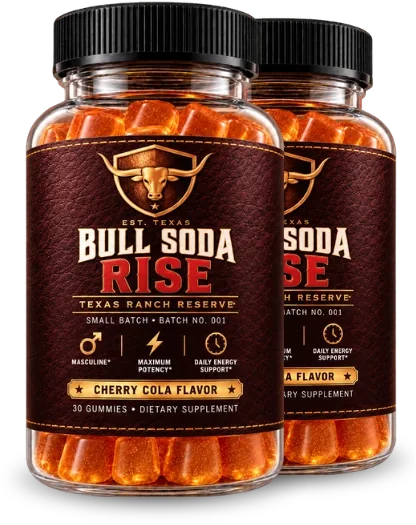
What is Panax ginseng? It is Asian ginseng, a root plant, and Bull Soda Rise Gummies list its extract (20:1) first in a 200 mg proprietary blend 1. The label does not say how many milligrams of it one gummy holds.
This post explains the name, what public health sources say about the plant, and what that means when you meet it on a supplement panel. We describe sources and the label only; we make no claim about what the gummy does for you.
What is Panax ginseng, in plain words?
Panax ginseng is the botanical name of Asian ginseng, a plant grown for its root. The National Center for Complementary and Integrative Health (NCCIH) publishes a page on it under the title "Asian Ginseng" 2.
NCCIH uses "Asian ginseng" and the botanical name Panax ginseng for the same plant, so you may see either on a label or a page. The plant name alone says little about a product, because it does not tell you the form, the ratio or the amount; the Supplement Facts panel is where those appear.
If you want the full page on how this ingredient sits in our product coverage, see Panax ginseng in Bull Soda Rise Gummies.
Where does Panax ginseng sit in Bull Soda Rise Gummies?
It is the first of three herbal extracts in a single 200 mg proprietary blend, each followed by the ratio "20:1" 1. Under FDA labeling rules, a blend lists its items in order of weight, so Panax ginseng is the largest share and rhodiola the smallest, but the split is not shown 3.
| Position | Item printed | Amount shown |
|---|---|---|
| 1 | Panax ginseng extract (20:1) | Not shown |
| 2 | Maca root extract (20:1) | Not shown |
| 3 | Rhodiola extract (20:1) | Not shown |
| Whole blend | Three items together | 200 mg |
So the honest answer to "how much ginseng is in a gummy" is that it is unknown. It is some part of 200 mg, and only the maker can say which part. Our page on the proprietary blend goes through the rest of the line.
What does NCCIH say about Asian ginseng?
NCCIH says the evidence is mixed and that safety questions remain for long use 2. It does not describe ginseng as a proven remedy for any of the uses it reviews.
- General fatigue: a possible small benefit, with conflicting results
- Athletic performance: most research finds no benefit
- Blood sugar: the evidence is inconclusive
- Short-term use, up to 6 months: appears safe for most people, according to NCCIH, while long-term safety is uncertain
- Insomnia: the most common side effect
- Rare problems: severe rash, liver damage and allergic reactions
Those points describe the plant in studies and are not statements about Bull Soda Rise Gummies. Because the amount in a gummy is not shown, we cannot match any study dose to a gummy, and we make no claim that it does what the studies looked at.
Who should ask a doctor or pharmacist first?
Anyone who takes prescription medicine, manages a condition, or is pregnant or nursing should ask first. The brand information page itself tells readers to consult a healthcare professional in those situations 1.
NCCIH adds specifics for ginseng. It says ginseng may affect blood clotting and may lower blood sugar, so people with diabetes should ask first. It also says it may worsen autoimmune disorders, and that some experts advise against use in children and during pregnancy or breastfeeding 2.
This is general information, not a check of your own medicines. Bring the bottle, or the Supplement Facts panel, to a pharmacist and ask about everything you take. Our medications page lists the questions worth asking, and who should not take it covers the wider list.
How do you check a ginseng line on any label?
Check three things: the plant name, the form and the amount. For Panax ginseng that means looking for the botanical name, a ratio such as 20:1 if it is an extract, and a milligram figure for ginseng on its own line.
- Find the exact name. "Panax ginseng" and "ginseng" are not interchangeable on every label.
- See whether it sits inside a proprietary blend. If it does, only the blend total is shown.
- Read the ratio as a preparation note, not a dose; our post on the 20:1 ratio covers that.
- Write down your medicines and ask your pharmacist, as advised by NIH for any supplement 4.
Herbal products are not tested like medicines, and labels may not list correct amounts, according to MedlinePlus 5. That is a reason to rely on the bottle in your hand as the source of truth and to ask the order desk any open question.
Frequently asked questions
Is Panax ginseng in Bull Soda Rise Gummies?
Yes, it is listed. Bull Soda Rise Gummies name Panax ginseng extract (20:1) first in a 200 mg proprietary blend 1. Check the Supplement Facts panel on your own bottle, because the brand page itself says to compare its figures with the physical label.
How much Panax ginseng is in Bull Soda Rise Gummies?
That is unknown. The blend totals 200 mg across three items and shows no individual amount, so no one outside the maker can state the ginseng share 3. Ask the order desk if you want to see whether they will share it.
What does NCCIH say about Panax ginseng ahead of using Bull Soda Rise Gummies?
NCCIH describes mixed evidence and says insomnia is the most common side effect, with rare rash, liver and allergic problems 2. It advises people with diabetes to ask first. Discuss any supplement with your doctor or pharmacist.
Where is the Panax ginseng in Bull Soda Rise Gummies grown?
Unknown. The listing prints Panax ginseng extract (20:1) 1 and says nothing about where the root was grown or how the extract was made. The order desk is the place to ask.
Sources for this page
- Bull Soda Rise brand information page with the Supplement Facts listing, read on Nov 25, 2026
- NCCIH: Asian Ginseng: Usefulness and Safety
- FDA: Dietary Supplement Labeling Guide (Supplement Facts panel, serving size, proprietary blends)
- NIH Office of Dietary Supplements: Dietary Supplements: What You Need to Know
- MedlinePlus: A guide to herbal remedies
Label words come from photos of the Bull Soda Rise bottle front. Supplement Facts come from the brand information page and owner pack; prices and guarantee wording from the seller order page as read on Nov 25, 2026. Confirm them on your bottle and at checkout. Where sources differ, the printed label wins.