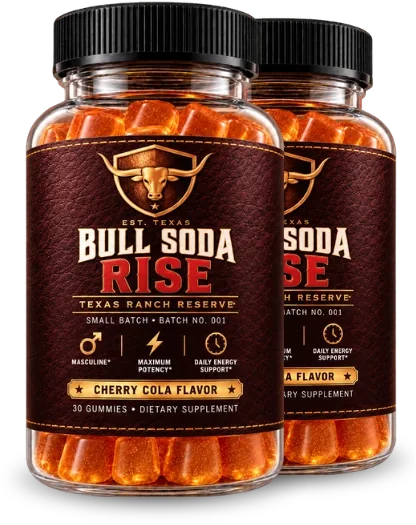
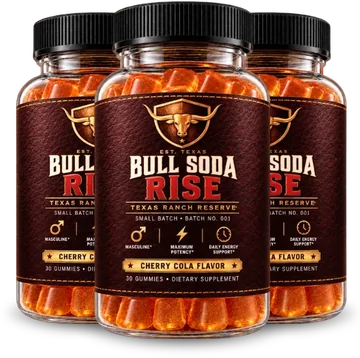
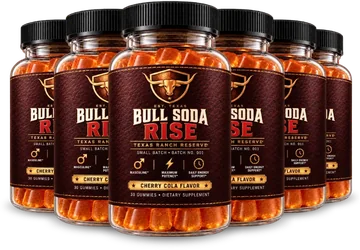
How to read a supplement facts label: start with the serving size, then read each amount and %DV, then check which lines hide their amounts inside a blend. We use the Bull Soda Rise Gummies panel as the worked example 1.
One caveat first: we have not seen a photo of the back label. The figures below come from the brand information page, which says to compare them with the bottle. Use this post as a method, and check every number against your own panel.
What does the top of the panel tell you?
The top of the panel gives the serving size and the servings per container, and every amount below it is per serving. The Bull Soda Rise Gummies panel lists one gummy as a serving and 30 servings per bottle, with 10 calories 1.
This sets your supply math. One gummy a day from a 30-gummy bottle lasts 30 days, and the directions on the brand page say one gummy once daily, do not exceed 1. If a panel said two or three units per serving, the daily amounts you read below would double or triple, which is the most common slip when comparing products.
A common mistake is to skip this line and compare only the headline numbers, which can make two products look alike when their servings differ. Read it first, every time, and note whether the unit is a gummy, a capsule or a scoop.
Our full line-by-line page is Bull Soda Rise Gummies Supplement Facts.
How do you read the amount and %DV columns?
The amount column states a weight per serving, and %DV compares that weight with an FDA Daily Value. A Daily Value is a reference amount for a nutrient, set by FDA for labeling 2.
You can check a %DV with one division. Niacin: 25 mg against a 16 mg DV is 156%, and vitamin B6: 2 mg against 1.7 mg is 118%. Zinc: 1.5 mg against 11 mg is 14%, and added sugars: 2 g against 50 g is 4% 3. Those four figures match the brand page, which is a good sign that its panel is internally consistent.
A %DV above 100 is not automatically a problem and not automatically fine either. The NIH niacin fact sheet gives an upper limit from supplements of 35 mg a day for adults, so 25 mg in one gummy is under it, and other products with niacin add to the total 4.
Which lines show no %DV, and why?
Lines with no %DV are ingredients that have no FDA Daily Value, so the panel prints only an amount or nothing at all. The same panel shows three such lines with amounts and one with a combined amount only.
| Line | Amount | %DV |
|---|---|---|
| Vitamin B3 (as niacin) | 25 mg | 156% |
| Vitamin B6 (as pyridoxine) | 2 mg | 118% |
| Zinc (as zinc citrate) | 1.5 mg | 14% |
| L-Carnitine | 25 mg | none |
| L-Citrulline | 35 mg | none |
| Grape seed extract (20:1) | 25 mg | none |
| Proprietary blend | 200 mg | none |
No DV does not mean no effect and does not mean safe or unsafe. It means the panel has no standard to compare against, so you rely on the amount and on what public sources say about it. The NIH carnitine fact sheet, for example, reports side effects at about 3 g a day, far above the 25 mg here 5.
What is a proprietary blend line?
A proprietary blend is one line that shows a total weight and lists its ingredients in order of weight, without an amount for each. FDA's labeling guide describes this layout 6.
On this panel the blend is 200 mg and names Panax ginseng extract (20:1), maca root extract (20:1) and rhodiola extract (20:1), in that order 1. The first named is the largest share, the last the smallest, and the split is unknown. The blend is also the largest listed item in the gummy by weight.
If a blend hides amounts you need, for example because you take a medicine, ask the maker or order desk. Our proprietary blend page explains what you can and cannot tell from it.
What is under the panel: other ingredients and a checklist
Below the panel sits the other-ingredients list, which names what holds the gummy together. On the brand page it reads corn syrup, sugar, water, pectin, natural color and flavor, and citric acid 1.
An allergen statement, and the source of the color and flavor, are not stated on what we saw. Use this short checklist on any supplement bottle:
- Serving size and servings per container.
- Each amount, per serving, in the same unit.
- %DV, checked by your own division where you can.
- Lines with no %DV, and where those sit.
- Any blend, and whether each item shows an amount.
- Other ingredients and allergens.
- Your own medicines, taken to a pharmacist or doctor.
See sugar and other ingredients for the sugar and base lines.
Frequently asked questions
Where is the Supplement Facts panel on Bull Soda Rise Gummies?
It sits on the back of the bottle, which we have not seen. We took the figures from the brand information page 1. Compare them with the panel on your own Bull Soda Rise Gummies bottle before relying on them.
How many gummies are in a serving of Bull Soda Rise Gummies?
One gummy is a serving, with 30 servings per bottle 1. The directions read one gummy once daily, do not exceed. Ask a pharmacist or doctor if you are unsure about timing, which the pages we read do not state.
Why does Bull Soda Rise Gummies show 156% DV for niacin?
Does Bull Soda Rise Gummies list the amount of each herb in the blend?
No. The 200 mg proprietary blend names three herbs in order of weight but shows no individual amounts 6. Ginseng is largest and rhodiola smallest, but the split is unknown.
Sources for this page
- Bull Soda Rise brand information page with the Supplement Facts listing, read on Nov 25, 2026
- FDA: Daily Value on the Nutrition and Supplement Facts Labels
- FDA: Added Sugars on the Nutrition Facts Label
- NIH Office of Dietary Supplements: Niacin fact sheet for consumers
- NIH Office of Dietary Supplements: Carnitine fact sheet for health professionals
- FDA: Dietary Supplement Labeling Guide (Supplement Facts panel, serving size, proprietary blends)
Label words come from photos of the Bull Soda Rise bottle front. Supplement Facts come from the brand information page and owner pack; prices and guarantee wording from the seller order page as read on Nov 25, 2026. Confirm them on your bottle and at checkout. Where sources differ, the printed label wins.