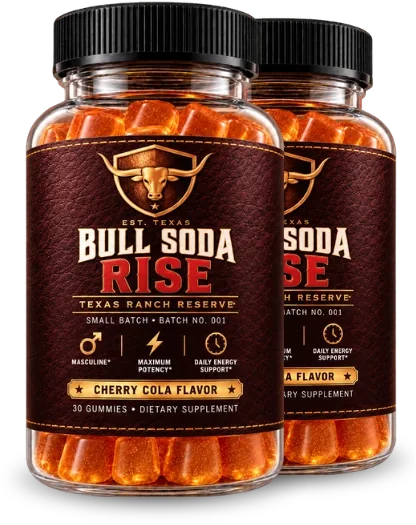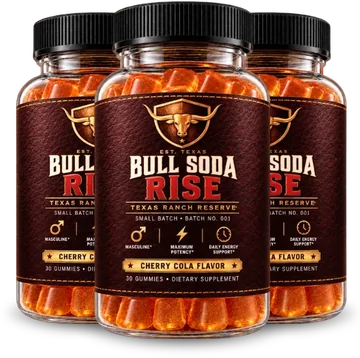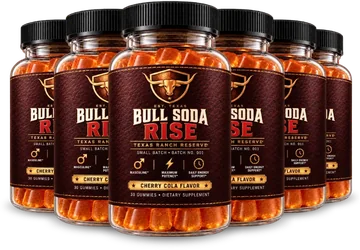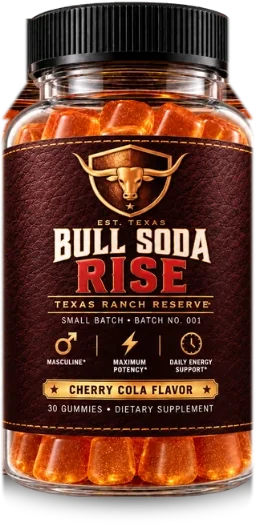
Bull Soda Rise Gummies Panax ginseng is a 20:1 extract named first in the 200 mg proprietary blend, ahead of maca root and rhodiola, on the brand information page 1. Its own amount is not shown, and nobody outside the maker can say how many milligrams one gummy holds.
This page explains what being first in a blend means, what the National Center for Complementary and Integrative Health (NCCIH) says about Asian ginseng, and who should ask a doctor or pharmacist before starting. We make no claim that the ginseng in this gummy does anything for you. People with diabetes, autoimmune conditions or blood-clotting concerns, and anyone on prescription medicine, should read the safety sections first.
Is Panax ginseng in Bull Soda Rise Gummies?
Yes. The Supplement Facts listing on the brand information page names Panax ginseng extract (20:1) as the first of three items in a 200 mg proprietary blend 1. The other two, in order, are maca root extract (20:1) and rhodiola extract (20:1).
NCCIH covers Panax ginseng under the name Asian ginseng, so this page uses the Asian ginseng information NCCIH publishes. Other plants sold as ginseng are not what the listing names.
The brand page says its figures should be checked against the physical label, and we have not seen the back label photo. Read the panel on your bottle to confirm the blend wording. Our proprietary blend page covers the whole blend, and the ingredient overview links every listed item.
How much Panax ginseng is in one gummy?
The ginseng amount is not disclosed. The listing gives one total, 200 mg, for all three blend items together, and no individual amounts 1.
FDA labeling rules let a proprietary blend show only its total weight, with ingredients listed in order of predominance by weight 2. So ginseng, listed first, is the largest share of the blend and rhodiola the smallest. The split itself is not shown, and we will not estimate it.
| Question | Answer from the listing |
|---|---|
| Is it listed? | Yes, Panax ginseng extract (20:1) |
| Position in the blend | First of three, so the largest share |
| Own amount | Not shown |
| Blend total | 200 mg for ginseng, maca and rhodiola together |
| Ginsenoside content | Not stated |
| Daily Value | None |
If the exact amount matters to you or your doctor, ask the order desk at +1 (302) 200-3480 and request the certificate of analysis for your lot.
What does 20:1 mean for the ginseng extract?
The 20:1 mark means about 20 parts of ginseng root were concentrated into about 1 part of extract. It describes how the extract was made, not how much of the active compounds, called ginsenosides, end up in a gummy.
We do not convert the ratio into an "equivalent" amount of raw root. That kind of figure can look large while saying nothing about compound content, and here the starting amount is not even known. No ginsenoside percentage is printed in the listing we have seen.
The same ratio appears on the grape seed line and on the other two blend herbs. Our Supplement Facts guide explains how to read each line.
What does NCCIH say about Asian ginseng?
NCCIH says some research suggests Asian ginseng may improve sexual function in erectile dysfunction 3. That is a statement about the herb in research settings, and it does not show anything about this gummy, whose ginseng amount is unknown.
NCCIH's summary covers several other uses:
- General fatigue: NCCIH says there may be a small benefit, with conflicting results.
- Athletic performance: NCCIH says most research finds no benefit.
- Blood sugar: NCCIH calls the evidence inconclusive.
This site does not claim that Bull Soda Rise Gummies improves erections, sexual function, energy or anything else. Studies used ginseng on its own at known amounts; this gummy combines an undisclosed amount with eight other listed actives. If ED is your concern, NIDDK says talking with a health care professional helps to properly diagnose it, and treatment addresses underlying causes first 4. See our evidence review for the product as a whole.
What side effects does NCCIH list for ginseng?
NCCIH says insomnia is the most common side effect of Asian ginseng 3. It also lists rare cases of severe rash, liver damage and allergic reactions.
On timing, NCCIH says short-term use of up to 6 months appears safe for most people, and that long-term safety is uncertain. That statement is about ginseng in general, not a judgment on this gummy, and it does not tell you how long you can use any product. Ask your doctor if you plan to take it for months.
Sleep problems are worth noting because the blend also lists maca and rhodiola, and sources list insomnia for both. If you notice trouble sleeping, stop and talk to a pharmacist. Our side effects page collects the notes for every listed ingredient.
Does ginseng interact with medicines or conditions?
Yes, NCCIH flags several. It says Asian ginseng may affect blood clotting, may worsen autoimmune disorders, and that blood sugar could drop, so people with diabetes should ask before using it 3.
- Blood-thinning medicines. Because NCCIH says ginseng may affect clotting, anyone on an anticoagulant or antiplatelet medicine should ask first.
- Diabetes medicines. NCCIH says ginseng may lower blood sugar, so ask before you combine it with diabetes medicine. The gummy also lists 2 g of added sugar.
- Autoimmune conditions. NCCIH says ginseng may worsen autoimmune disorders.
- Other prescriptions. NCCIH's general advice is to tell your providers about any complementary product you use 5.
Our medications page and ED medicines page cover the other listed interactions, including the L-citrulline flags for nitrates and PDE-5 inhibitors.
How does the ginseng line fit with the rest of the label?
Ginseng is one of nine listed actives in each gummy, and the one NCCIH links to research on erectile dysfunction. The other eight have their own notes, and some overlap with ginseng's.
- Sleep: sources list insomnia for ginseng, maca and rhodiola, all three blend herbs.
- Blood sugar: NCCIH flags ginseng, and the gummy lists 3 g of carbohydrate and 2 g of added sugar; ODS says high-dose nicotinic acid can raise blood sugar, though one gummy lists 25 mg of niacin.
- Blood pressure: not a ginseng flag in NCCIH's summary, but L-citrulline, grape seed, maca and rhodiola all carry notes.
None of these overlaps shows an effect from this gummy. They show why a pharmacist should see the full panel, not one line. The maca root page and rhodiola page cover the other two blend herbs, and our testosterone page explains why we make no hormone claim for any of them.
Who should ask before taking ginseng in Bull Soda Rise Gummies?
Ask a doctor or pharmacist first if you have diabetes, an autoimmune disorder or a bleeding concern, or if you take any prescription. NCCIH also says some experts advise against ginseng in children and in pregnancy or breastfeeding 3.
Bull Soda Rise Gummies is for adults 18 and over. The brand information page says to consult a healthcare professional if you are pregnant, nursing, taking medication or managing a medical condition, and to keep it out of reach of children.
Bring the bottle or a photo of the panel to the appointment. Because the ginseng amount is not printed, your clinician may want to know that the blend total is 200 mg and that ginseng is listed first. Our who should not take it page gathers every situation in one list.
Why can no one give a ginseng dose for this gummy?
No one can give a ginseng dose because the maker discloses only the 200 mg blend total. Being first in the list tells you ginseng is the largest share, but the remaining two items could take any smaller share.
MedlinePlus notes that herbal products are not tested like medicines and that labels may not list correct amounts 6. The FDA says supplements are not approved before sale and that makers are responsible for the safety and labeling of what they sell 7. Both points argue for asking the order desk for a certificate of analysis rather than assuming a figure.
If you decide to buy, check the kits at the official checkout and confirm the product name in your cart, since the order page heading we saw did not match this product.
Frequently asked questions
Is Panax ginseng the largest item in the Bull Soda Rise Gummies blend?
Yes, by position. Panax ginseng is listed first, and blends list items in order of weight, so it is the largest share of the 200 mg blend. The actual split between ginseng, maca and rhodiola is not shown.
Is the ginseng in Bull Soda Rise Gummies Asian or American ginseng?
The listing names Panax ginseng extract (20:1), which NCCIH covers as Asian ginseng. The listing does not name any other ginseng. Check the panel on your bottle to confirm the wording.
Does Bull Soda Rise Gummies ginseng help with ED?
We do not claim that. NCCIH says some research suggests Asian ginseng may improve sexual function in erectile dysfunction, but that says nothing about this gummy, whose ginseng amount is unknown. See a health care professional about ED.
How long can someone use the Panax ginseng in Bull Soda Rise Gummies?
There is no duration on the listing. NCCIH says short-term use of Asian ginseng up to 6 months appears safe for most people and long-term safety is uncertain. Ask your doctor before using any ginseng product for months.
Does Bull Soda Rise Gummies print a ginsenoside percentage?
No ginsenoside percentage appears in the listing we have seen. The line shows only the extract name and the 20:1 ratio inside the 200 mg blend. Ask the order desk for the certificate of analysis for your lot.
Sources for this page
- Bull Soda Rise brand information page with the Supplement Facts listing, read on Nov 25, 2026
- FDA: Dietary Supplement Labeling Guide (Supplement Facts panel, serving size, proprietary blends)
- NCCIH: Asian Ginseng: Usefulness and Safety
- NIDDK: Erectile Dysfunction (ED)
- NCCIH: Safe Use of Complementary Health Products and Practices
- MedlinePlus: A guide to herbal remedies
- FDA: Questions and Answers on Dietary Supplements
Label words come from photos of the Bull Soda Rise bottle front. Supplement Facts come from the brand information page and owner pack; prices and guarantee wording from the seller order page as read on Nov 25, 2026. Confirm them on your bottle and at checkout. Where sources differ, the printed label wins.